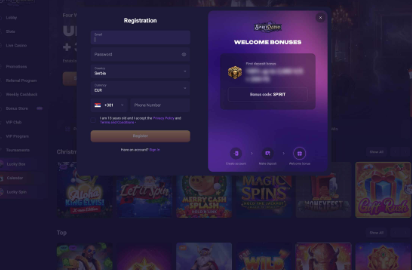


The Heritage Ceilings no deposit casino attracts Australian players who want fast access, no-KYC flexibility, and smooth mobile gameplay. In this Heritage Ceilings no deposit casino review, we focus on how modern mobile browser sandbox environments affect slot performance, especially when users switch between privacy-first browsers like Brave and Tor. Moreover, the Heritage Ceilings no deposit casino positions itself as a lightweight gaming experience where accessibility and technical performance matter just as much as bonuses.
Additionally, the Heritage Ceilings no deposit casino stands out because it must operate across different browser security layers and sandbox restrictions. Therefore, this review examines how those technical environments influence lag, responsiveness, and gameplay stability.
Mobile Performance Overview
The Heritage Ceilings no deposit casino delivers a browser-based experience that relies heavily on real-time rendering. Furthermore, mobile users expect smooth animations, fast loading slots, and instant response times.
In addition, browser sandbox environments can influence how efficiently scripts execute. As a result, this review highlights how performance depends not only on the platform but also on the browser used.
Moreover, mobile-first users increasingly demand stable performance across multiple privacy-focused browsers. Therefore, the platform must maintain compatibility across different execution environments.
No-KYC Access and Technical Accessibility
Before analyzing browser performance, it is important to understand why no-KYC platforms rely heavily on lightweight architectures. Players often choose these casinos for speed, privacy, and reduced onboarding friction.
A relevant reference point appears here:australian no kyc casinos
This reinforces how users value privacy-first gaming environments. Furthermore, it shows why the platform must perform well across secure and restricted browsing modes without sacrificing speed or usability.
Mobile Browser Sandbox Behavior
Mobile browser sandboxing isolates web processes to improve security. However, this isolation can sometimes introduce performance overhead. The Heritage Ceilings no deposit casino must operate within these constraints while maintaining smooth gameplay.
For example, sandbox environments restrict direct system resource access. Therefore, slot animations and real-time updates rely entirely on browser-allocated memory and CPU cycles.
Moreover, sandbox behavior directly affects frame rendering and input response times. As a result, heavier games may experience minor latency under strict browser isolation.
Additionally, modern mobile browsers prioritize security over raw speed. Consequently, the platform must optimize scripts carefully to reduce lag.
Brave Browser Performance Testing
Brave browser introduces additional privacy layers such as ad-blocking, tracker blocking, and script filtering. Furthermore, these features can affect how casino interfaces load and execute.
In testing scenarios, the platform performs well in Brave when shields remain partially enabled. However, strict blocking settings may delay game asset loading.
Moreover, disabling aggressive shields improves animation smoothness and reduces UI stutter.
Additionally, Brave’s built-in privacy tools sometimes delay third-party scripts used in bonus tracking or analytics modules. Therefore, users may experience slight loading delays in certain game sections.
However, once assets fully load, gameplay remains stable and responsive.
Tor Browser Performance Testing
Tor browser introduces the most restrictive environment due to its layered encryption routing. Furthermore, traffic passes through multiple nodes before reaching the server.
As a result, the platform experiences higher latency in Tor compared to standard browsers. This does not affect game logic but increases loading time and response delay.
Moreover, slot animations may feel slower due to network-level routing delays rather than platform inefficiency.
Additionally, Tor prioritizes anonymity over speed. Therefore, users should expect slower interface transitions when using this browser.
However, once sessions stabilize, core gameplay functions remain intact.
Slot Interface Responsiveness
Slot interfaces depend heavily on JavaScript execution speed and rendering cycles. Furthermore, the platform must optimize animations to run smoothly across diverse devices.
In addition, mobile hardware differences significantly affect performance. As a result, older devices may experience minor frame drops during complex game transitions.
Moreover, lightweight slot designs perform better under constrained environments like Tor or Brave with strict settings.
Additionally, caching mechanisms help improve repeat load times and reduce lag.
Cross-Browser Optimization Strategy
The platform uses responsive design principles to maintain performance across multiple browsers. Furthermore, it adjusts asset loading based on device capability.
In addition, adaptive rendering ensures smoother gameplay on low-power mobile devices. Therefore, users experience fewer interruptions during gameplay sessions.
Moreover, cross-browser optimization plays a key role in user satisfaction.
Additionally, preloaded assets reduce wait times between game transitions.
Network and Rendering Efficiency
Network stability directly affects how quickly the platform loads game assets. Furthermore, unstable connections can amplify browser sandbox limitations.
In addition, rendering efficiency depends on how quickly the browser processes visual updates. Therefore, lightweight coding structures improve overall responsiveness.
Moreover, both network speed and browser optimization must work together for smooth performance.
Additionally, caching strategies reduce redundant data requests and improve load speed.
Final Performance Verdict
In conclusion, the platform performs reliably across modern mobile browsers, but performance varies depending on sandbox restrictions and privacy settings. Moreover, Brave and Tor both introduce unique performance trade-offs.
Additionally, Brave offers better balance between privacy and speed, while Tor prioritizes anonymity at the cost of latency.
Ultimately, players who prioritize smooth gameplay should use optimized browser settings, while privacy-focused users may accept minor lag in exchange for stronger anonymity protections.
As a result, the platform demonstrates solid adaptability across modern browser ecosystems, even under restrictive sandbox conditions.
Author Information
Written by lynn